


About Sanda Celadon


Overview

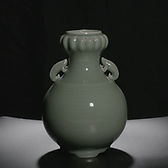
Sanda Celadon is renowned as one of the world's three great celadon traditions.
Production began in the late Edo period (1799) at kilns in Shitehara, Miwa, and Mushio areas of Sanda City, and continued until the early Showa period.
Uchida Chuubei, who discovered the raw materials, and Kanda Soubei, a wealthy merchant who provided support, significantly contributed to quality improvements. The Sanda Ceramics Company even exported overseas, but production ended in 1935 (Showa 10).
Celadon is characterized by its beautiful glassy surface created by glazing techniques. At the time, it was difficult to handle and required expert judgment in selecting raw materials.
Sanda celadon was highly praised for its transparent coloration and achieved quality comparable to Chinese celadon. By the time imports from China ceased, the craftsmanship had reached such heights that the pieces were indistinguishable from their Chinese counterparts.
Porcelain is more durable and stain-resistant than earthenware, making it easier to maintain.
Similarly, Sanda celadon, if unbroken, can maintain its beautiful appearance for a very long time - this is part of its enduring appeal.
History

Celadon first became known in Japan during the Heian period, when it was not produced domestically and celadon imported from China was considered to be of the highest quality. Korean Goryeo celadon was also highly acclaimed, and East Asian celadon culture had a profound influence on Japan.
Celadon porcelain was first produced in Japan in the early 17th century in Hizen Nabeshima (present-day Saga Prefecture), which was also a producer of celadon magnets. Eventually, celadon magnets were discovered in Sanda, but at first they were not put to good use, and even when proposals to produce them were made to the lord, he showed no interest. Nevertheless, efforts to produce celadon porcelain in Sanda continued, led by Kanda Sobei.
Master craftsman Kinkodo Kamesuke was invited from Kyoto, and production began at the Miwa Myojin Kiln. Thanks to Kamesuke's introduction of his techniques, the celadon produced in Sanda boasted an extremely high level of perfection, to the point that it was described as "so good it could be mistaken for something made in China." Its reputation spread throughout the country, and celadon sales outlets were even opened in Osaka and Edo, expanding distribution.
Through this history, Sanda celadon eventually came to be known as one of the "three great celadon porcelains in the world."
Features

On August 15, 2025, Sanda Celadon was designated as a traditional craft of Hyogo Prefecture.
Sanda celadon ware became a huge hit thanks to its use of a mold-making technique.
By using molds for each part, even the handles and bases, even craftsmen without high skills can make them , and we have succeeded in supplying celadon of consistent quality.
He also never neglected his pursuit of beauty.
By applying multiple layers of glaze, the refraction of light becomes more complex, creating a sense of translucent depth.

For Reconstruction

Narrator: Ito (Director)
We hope that people will utilize their existing skills while embracing the freedom that comes with young talent entering the field and current trends, all while cherishing each individual's wisdom and techniques.
I believe there's room for celadon that breaks free from traditional forms and suits the current era. As a creator myself, I want to convey something purely beautiful.
"When 10,000 years have passed, the difference of about 100 years now will be barely a millimeter on the timeline of history. Isn't it amazing to think that something with your name on it could remain for 10,000 years?"
I believe that by continuously increasing the number of creators and growing the community of Sanda celadon artisans, we can establish solid recognition for Sanda celadon.
I want people overseas to say, "Chinese celadon is wonderful, but Sanda celadon is great too." I want to spread the word that one of the world's three great celadon traditions exists in Japan and share the charm of Sanda celadon.
These thoughts drive me to continue my pottery practice.
Works


